
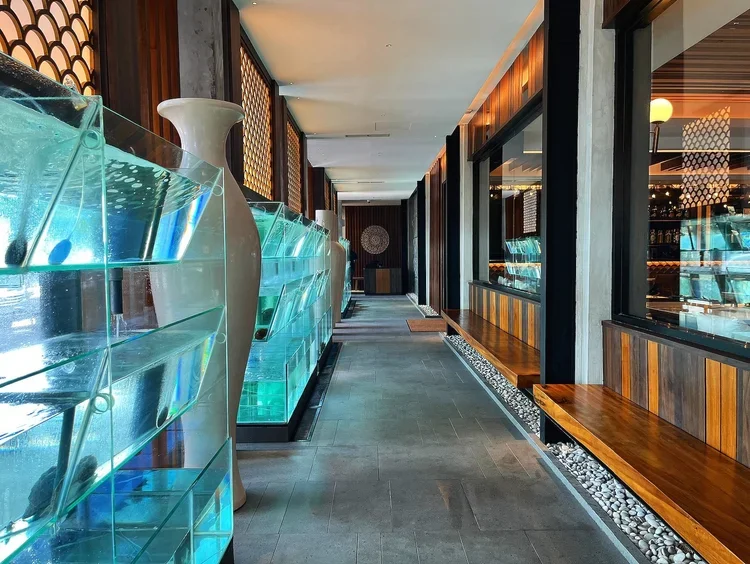
Have you ever walked into a seafood restaurant and immediately spotted a giant aquarium filled with swimming fish, lively crabs, or giant lobsters waving their claws? For many families, especially children, this is one of the most exciting parts of dining out.
Kids often rush to the tank, pointing at their favorite sea creatures while asking dozens of curious questions. Meanwhile, parents appreciate knowing that the seafood they are about to enjoy is incredibly fresh.
These fascinating aquariums are called live seafood tanks, and they are much more than just decorative displays. They play an important role in keeping seafood fresh, healthy, and ready to be cooked at its best.
In this article, we'll explore what live seafood tanks are, how they work, why restaurants use them, and why children absolutely love seeing them. We'll also take a closer look at Ocean Dynasty Bali, where live seafood tanks are an important part of the dining experience.
What Is a Live Seafood Tank?
A live seafood tank is a specially designed aquarium system used by seafood restaurants to keep marine animals alive until they are selected and prepared for cooking.
Unlike regular fish tanks found in homes, live seafood tanks are engineered to maintain precise water conditions that closely mimic the seafood's natural habitat. These tanks can house various types of seafood, including:
Live lobsters
Mud crabs
King crabs
Groupers
Snappers
Sea bass
Prawns
Clams
Other premium seafood species
The main purpose of a live seafood tank is simple: to preserve the seafood's freshness and quality until the moment it reaches the kitchen.
When seafood remains alive until cooking, it retains its natural moisture, flavor, texture, and nutritional value far better than seafood that has been frozen or stored for extended periods.
How Do Live Seafood Tanks Work?
At first glance, a seafood tank may look like a simple aquarium. However, there is actually sophisticated technology working behind the scenes.
1. Water Filtration Systems
The water constantly circulates through advanced filtration systems that remove waste, debris, and harmful substances. These filters help maintain clean water and prevent stress on the seafood.
2. Temperature Control
Different species thrive at different temperatures. For example:
Lobsters require cooler water.
Tropical fish prefer warmer conditions.
Restaurants carefully regulate water temperatures to ensure each species remains healthy and active.
3. Oxygen Management
Just like humans need air, seafood needs oxygen-rich water.
Special aeration systems continuously add oxygen to the tank, allowing fish, crabs, and lobsters to breathe comfortably.
4. Salinity Balance
Marine seafood requires saltwater conditions similar to the ocean. Restaurants regularly monitor and adjust salinity levels to maintain the proper balance.
5. Species Separation
Not all seafood gets along with each other. Restaurants often separate different species into designated compartments to prevent fighting, injury, or stress.
Why Restaurants Use Live Seafood Tanks
Premium seafood restaurants invest in live seafood tanks for several important reasons:
A. Maximum Freshness
Freshness is one of the most important factors in seafood quality. When seafood is kept alive until cooking, there is virtually no delay between harvest and preparation. This means guests enjoy seafood at its peak condition.
B. Better Flavor
Fresh seafood has a naturally sweet, clean, and delicate taste. Many seafood lovers can immediately tell the difference between freshly prepared live seafood and seafood that has been frozen.
C. Superior Texture
Texture plays a major role in seafood enjoyment. Fresh fish tends to be:
Firmer
More succulent
More tender
Similarly, live crab and lobster meat often has a sweeter flavor and more satisfying texture than frozen alternatives.
D. Transparency for Customers
Live seafood tanks allow guests to see exactly what they are ordering. This transparency builds trust and confidence because customers know the seafood is fresh and properly cared for.
E. Premium Dining Experience
Watching seafood being selected directly from the tank adds excitement and uniqueness to the meal. Many diners consider it part of the overall restaurant experience.
Tank-to-Table vs. Frozen Seafood
One of the biggest advantages of live seafood tanks is the tank-to-table concept. This approach means the seafood goes directly from the tank to the kitchen shortly after being selected, minimizing storage time and helping preserve its natural freshness.
1. Flavor
When it comes to flavor, tank-to-table seafood often stands out for its naturally sweet and delicate taste. Because the seafood remains alive until it is prepared, its fresh ocean flavor is preserved, creating a cleaner and more vibrant taste profile.
Frozen seafood, on the other hand, may lose some of its natural sweetness during the freezing and thawing process. Depending on storage conditions, it can also develop subtle freezer-related flavors that slightly affect its overall taste.
2. Texture
Texture is another area where tank-to-table seafood excels. Freshly prepared live seafood tends to have firmer, juicier flesh and a more satisfying bite. Fish often retains its delicate tenderness, while shellfish such as lobster and crab remain succulent and flavorful.
Frozen seafood can still offer good texture, but ice crystals that form during freezing may alter the structure of the meat. After thawing, some seafood may become softer or slightly mushy compared to its live counterpart.
3. Freshness
Perhaps the most obvious difference is freshness. Tank-to-table seafood remains alive until just before cooking, ensuring that it reaches the plate in its freshest possible state. This helps preserve its natural moisture, nutrients, and quality.
Frozen seafood, meanwhile, may be stored for days, weeks, or even months before being served. Although modern freezing techniques are highly effective at maintaining quality, the final freshness still depends on proper handling, storage, and thawing practices throughout the supply chain.
Tips for Choosing Seafood Directly From the Tank
If it's your first time selecting seafood from a live tank, don't worry. Here are a few helpful tips:
Look for active movement. Fish should swim naturally, while crabs and lobsters should show movement when approached.
Check for clear eyes
Ask restaurant staff for recommendations
Consider the cooking style. Different seafood pairs well with different cooking methods.
Choose according to group size
Experience Live Seafood Dining at Ocean Dynasty Bali
For families looking to enjoy authentic Chinese seafood cuisine in Bali, Ocean Dynasty Bali offers a memorable tank-to-table dining experience.
One of the restaurant's highlights is its impressive live seafood display, where guests can view premium seafood before making their selection.
The live seafood tanks are an integral part of the restaurant's commitment to freshness, quality, and authenticity.
Guests can often find a variety of seafood options such as:
Fresh mud crabs
Seasonal fish
Premium shellfish
Other carefully selected seafood specialties
The restaurant's chefs then prepare the seafood using traditional Chinese cooking techniques that highlight the natural flavor of each ingredient.
For children, the live seafood tanks add an extra layer of excitement to the dining experience, making family meals both entertaining and educational.
Before your visit, be sure to browse our menu and reserve your table in advance via WhatsApp, phone call (+62 811-1920-9007), or our website. Booking ahead helps ensure the best seating, seafood availability, and a seamless dining experience for you and your loved ones.
Come discover why so many locals and visitors choose Ocean Dynasty for outstanding Chinese cuisine, premium live seafood, and unforgettable family dining in Bali.
FAQ
What is a live seafood tank?
A live seafood tank is a specialized aquarium system used by restaurants to keep seafood alive and healthy until it is selected and cooked.
Is seafood from a live tank fresher than frozen seafood?
Generally, yes. Live seafood is often considered fresher because it remains alive until preparation, helping preserve flavor, texture, and moisture.
Why do restaurants display seafood in tanks?
Restaurants use tanks to maintain freshness, showcase quality, and allow guests to select seafood directly before cooking.
Are live seafood tanks safe for seafood?
Yes. Modern seafood tanks use filtration, oxygenation, temperature control, and water-quality management systems to keep seafood healthy.